Showing posts with label Found Things. Show all posts

Saturday, November 2, 2013

Borromean Glow Stick Bracelets

As a (slightly belated) Halloween post, here's a cool thing you can do with glow stick bracelets (or really anything, I just happen to have a lot of these now) -


Check it out! This arrangement is known as the Borromean rings and is particularly interesting because no two rings are actually linked to each other, yet all three together are linked. They can be worn like so in a nice, mathematically interesting bracelet.


Putting these rings together is fantastically simple. First take two bracelets (or other circular objects of your choice) and overlap one on the other like so.
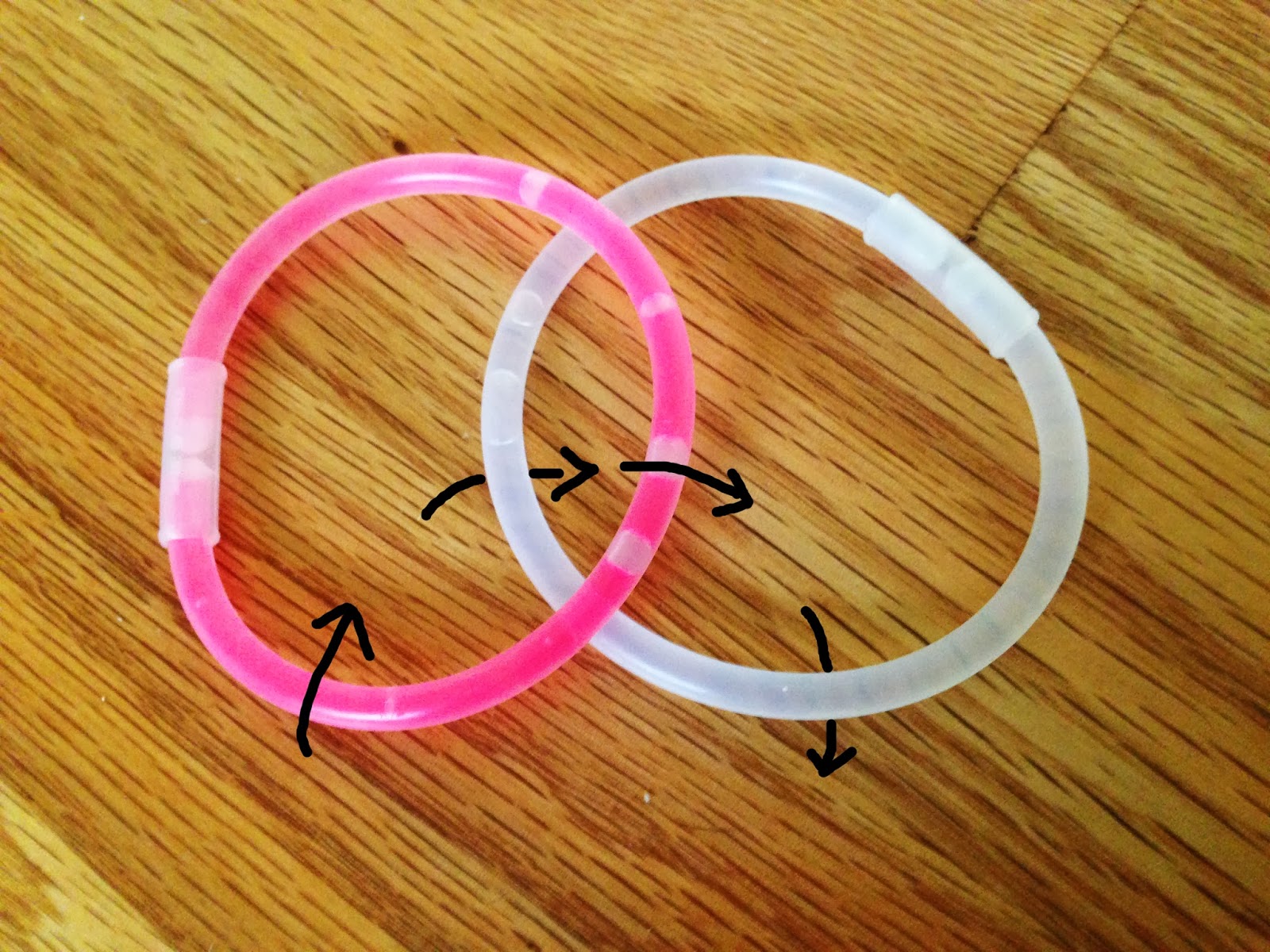

Then, take the third bracelet and weave it through the other two, alternating over and under as you come around. 


Then simply connect up the two ends of the third bracelet and voila!


If you look closely, you'll find some other neat properties. For example, if you were to cut the Borromean rings, you would get one iteration of the standard three-strand braid, suggesting an alternate method of construction. Just as if you were to remove one strand of a braid and cause it to fall apart, you can try and take out one ring and see that the other two are no longer linked. 
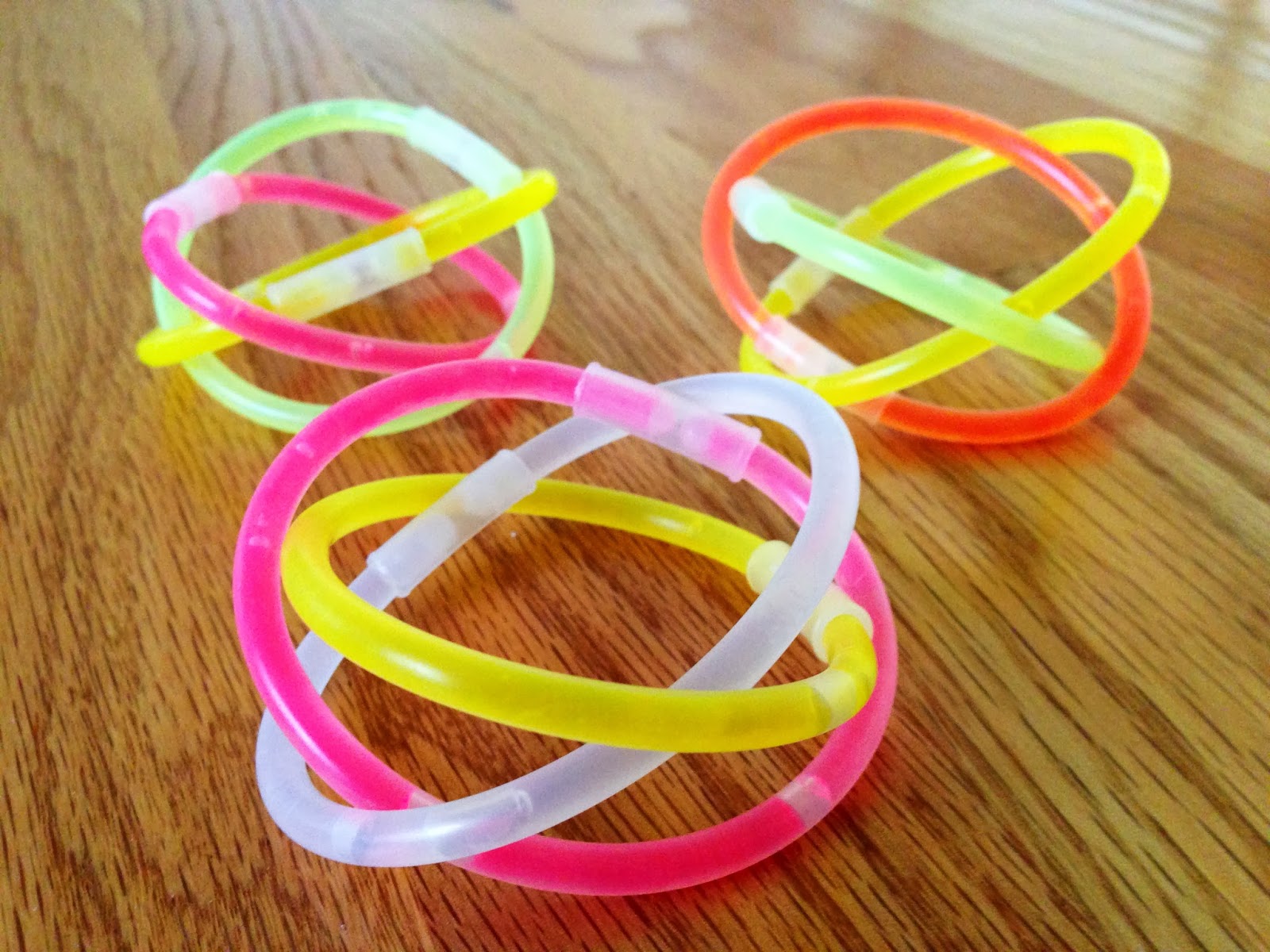
Also notice how if you look at any one ring, it is wholly inside of, and wholly outside of, the other two rings.


Alternatively, you could dip your rings into some bubble solution. The result is one of a class of objects called Seifert surfaces, any surface defined by a knot or link. Here is a beautiful sculpture of this surface (image source


And just think, all of this from three simple rings... 
 
"I'm just playing. That's what math is - wondering, playing, amusing yourself with your imagination." - Paul Lockhart

Wednesday, October 23, 2013

An Afterthought on Tessellations


Check out this awesome tiling I saw today - this place had its floor tiles cut like Escher's lizard tessellations! 

The four types of tessellations - translations, reflections, rotations, and glide reflections

Sunday, September 22, 2013

Triquetras, Trefoils, and Topological Awesomeness

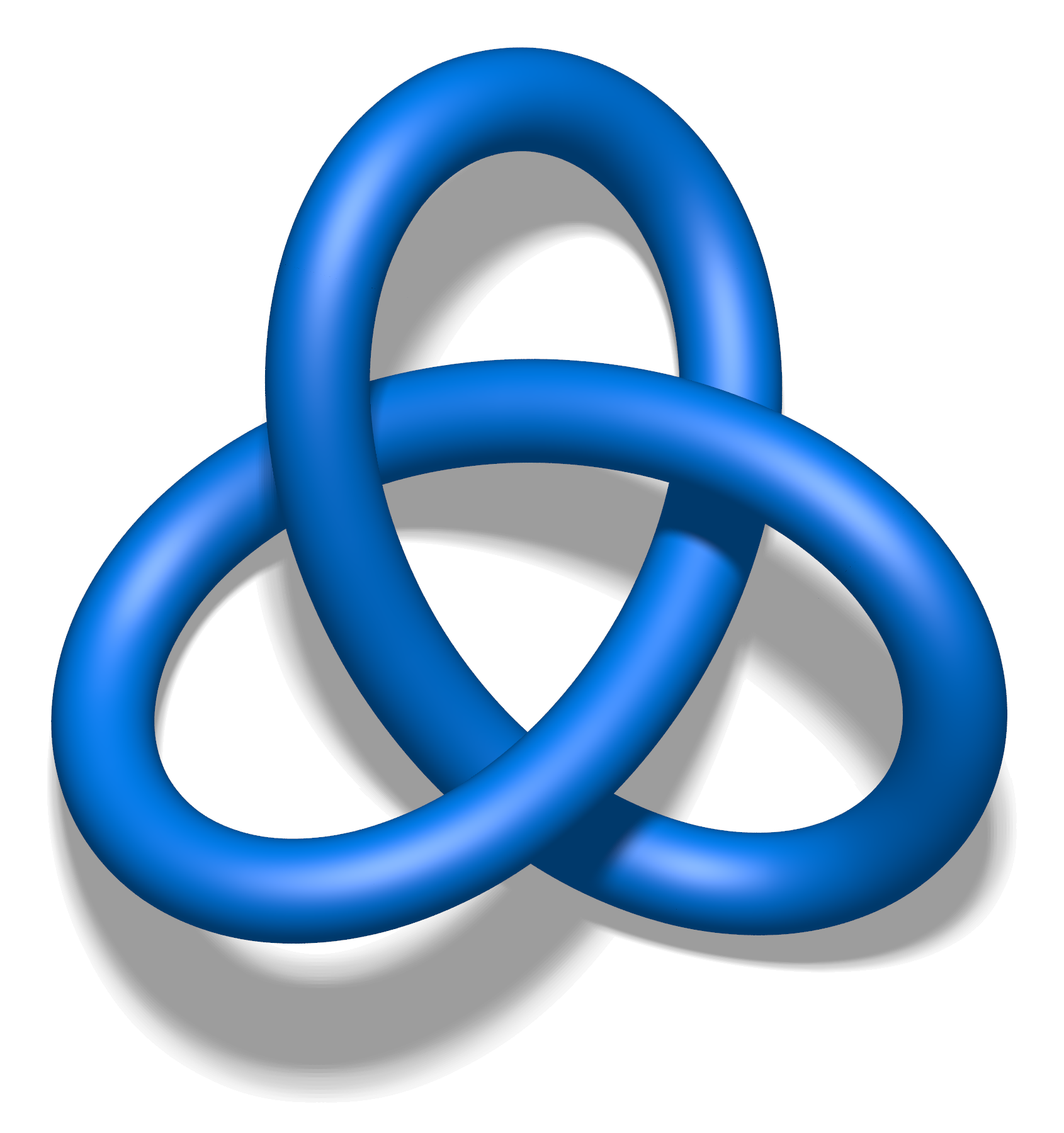
Here is a pretty awesome piece of mathematically interesting art I saw the other day. 

This shape is called a triquetra. The name comes from the Latin tri- meaning "three" and quetrus meaning "cornered." 

It is analogous to the trefoil knot - what you get when you tie a simple overhand knot and join the two ends. 

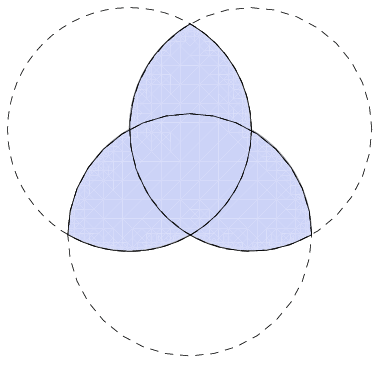
Another way to find a triquetra is to look at the intersection of three circles, like a Venn diagram. (Note that the shape formed at the very center is a Reuleaux triangle, a shape of constant width, deserving of a blog post all of its own...another day)

The triquetra is often shown interlaced with a circle and is common to Celtic art. It has many meanings throughout various religions and symbolizes things that are threefold - mind, body, soul; past, present, future; Father, Son, Holy Spirit; to name a few. 

And if that wasn't cool enough, here's another cool thing you can do - take a strip of paper, give it three half-twists, and join the two ends into a three twist Möbius strip. 

Then, cut the strip in half along the middle of the strip. After some rearranging and playing with the twists, BAM! Trefoil! How awesome is that? 

For further exploration: 
  • Draw a triquetra - link 
  • Animation of Möbius strip to trefoil knot - link
  • George Hart shows how to cut a bagel into a trefoil knot for some "mathematically correct breakfast" - link  

Images 2 and 5 from here, Image 3 from here, and Image 4 from here.

Monday, September 2, 2013

Fibonnaci Pinecone


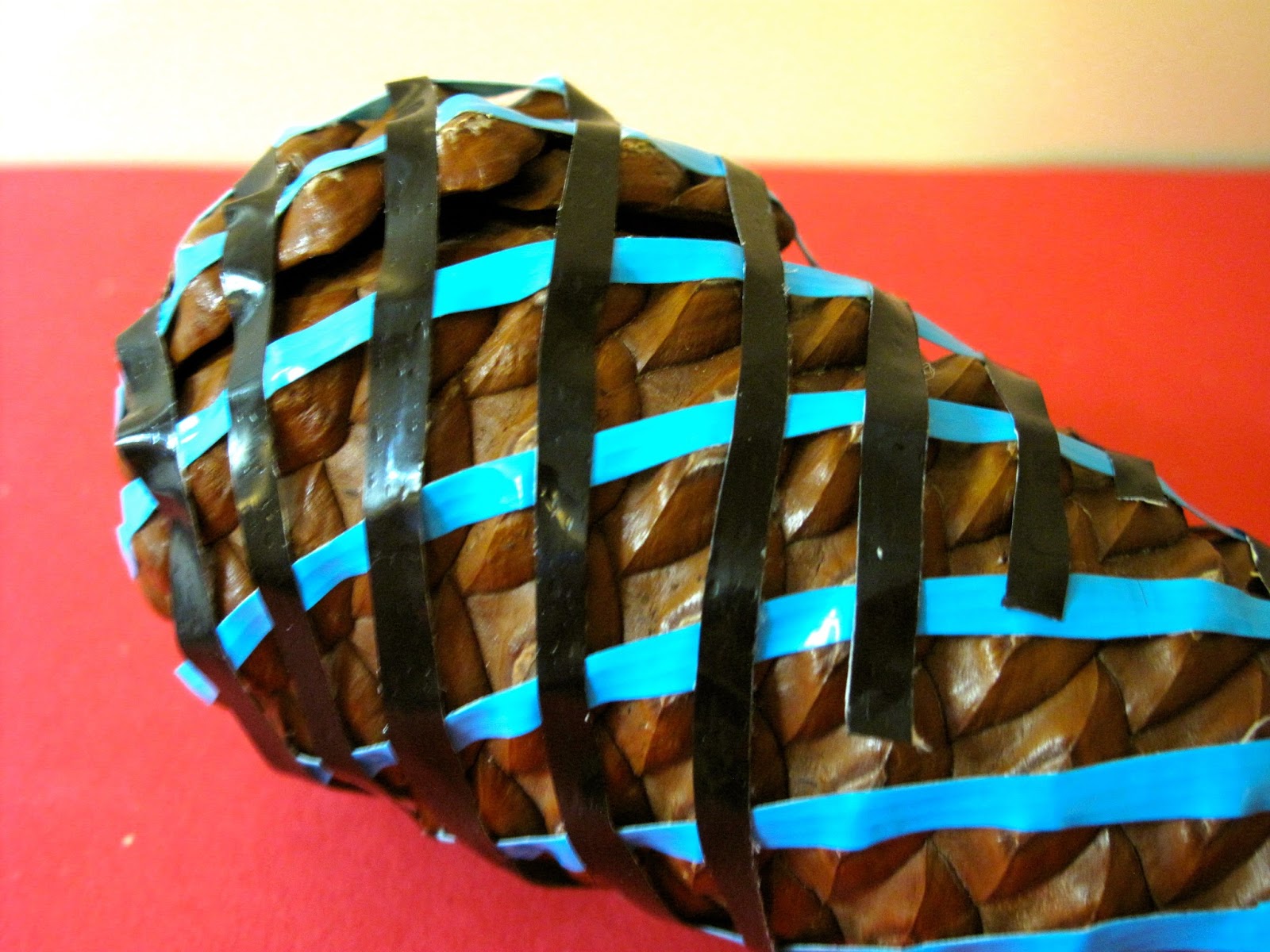
So I really like pinecones - I have a bunch just lying around my room because I find them very spirally and pretty. But in addition to that, they're beautifully mathematical. All you have to do is count the number of spirals; this pinecone has 8 going this way... 


And 13 the other way. Two of my other pinecones have 3 spirals and 5 spirals, and 5 and 8 spirals. Sound familiar? These are adjacent Fibonacci numbers - seriously, the series you get by adding the two previous numbers that goes 1, 1, 2, 3, 5, 8, 13, 21, 34... shows up everywhere in nature, from sunflower seeds to artichokes to pineapples. This is because these Fibonacci arrangements result in the optimal packing of seeds/leaves/plant bits, so that they are all uniformly spaced and can maximize the amount of sunlight they receive. The more you look for these instances of Fibonacci numbers in the world around you, the more you'll find them - delightful glimpses into the mathematics in which our universe is written.